Home › Industrial and Heavy-Duty Asphalt Paving
Handle heavy traffic with confidence using industrial asphalt paving in Kansas City, MO. We design thicker asphalt sections and strong bases for truck yards, loading docks, and warehouse lots. Our team understands load ratings and turning stresses so your pavement holds up under demanding conditions.
Precision Asphalt Kansas City provides professional industrial asphalt paving throughout Kansas City, MO, Missouri and the surrounding area. Our licensed, insured crew delivers safe, clean, on-time work with a free estimate before anything begins. Call (816) 326-1167 or request your free quote.
Industrial Asphalt Paving Built for Heavy Loads in Kansas City
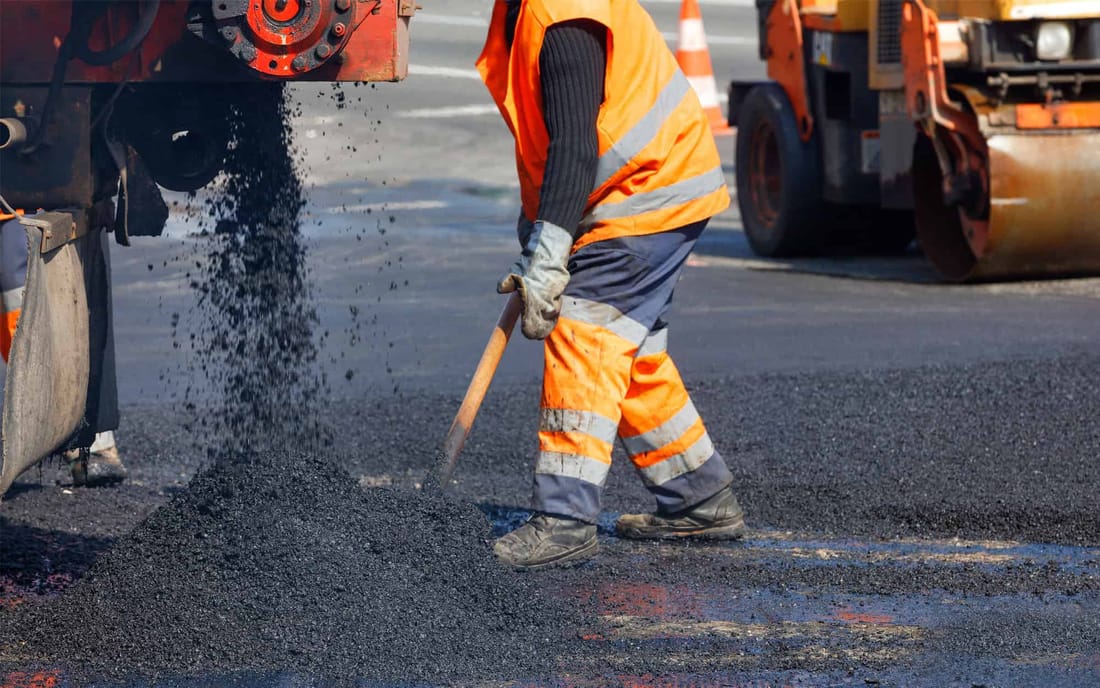
Industrial asphalt paving is not the same as paving a small parking lot or driveway. At Precision Asphalt Kansas City, we design and build pavements that stand up to forklifts, loaded semis, constant turning, and chemical drips that come with real-world industrial operations in Kansas City, Missouri.
When we look at an industrial site, we start with how the pavement will be used. We ask about axle loads, staging areas, forklift routes, container storage, and where trucks will turn or back in. A shipping lane with daily 80,000 pound loads needs a very different section than an employee parking row. That use data, plus local soil conditions, drives how we design your industrial asphalt paving.
Kansas City has freeze-thaw cycles, clay-heavy soils in many industrial zones, and drainage challenges near the rivers. If a contractor ignores those factors, you get ruts, alligator cracking, and early failure. Precision Asphalt Kansas City has paved and repaired facilities from the West Bottoms to North Kansas City and the I-435 industrial corridors. That local experience helps us choose the right base depth, asphalt mix, and slope to keep your operation moving instead of dealing with soft spots and standing water.
How We Build Heavy-Duty Asphalt Pavement Step by Step
A durable industrial pavement starts below the surface. Our first step is evaluation. We check existing soil or existing pavement, take measurements, and identify drainage paths. If we suspect weak subgrade, such as pumped clay or organic fill, we can perform proof rolling with a loaded truck to watch for deflection. Soft areas are marked for undercut and replacement.
Next we handle subgrade prep. For new construction, we strip organics, compact the native soil, and, when needed, stabilize it with rock or lime to achieve the bearing capacity required for heavy truck traffic. For reconstruction, we may mill or pulverize the existing asphalt and blend it with aggregate to create a stronger base. In Kansas City industrial yards we commonly install 6 to 12 inches (or more for high-load lanes) of crushed rock base, compacted in thin lifts with vibratory rollers.
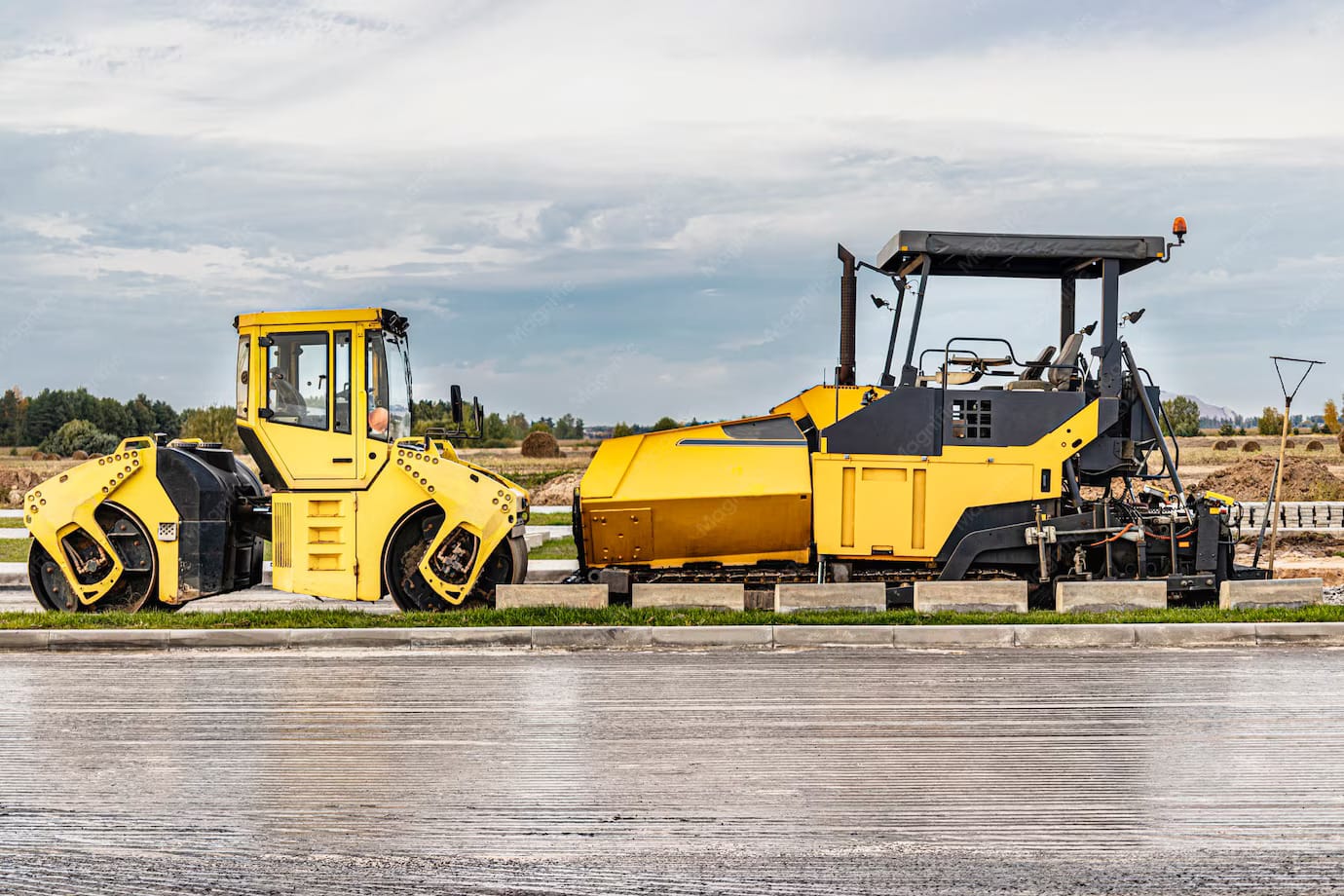
Once the foundation is built, we install the asphalt in multiple lifts. Industrial asphalt paving usually includes a thicker binder course with larger aggregate to handle loads, then a tighter surface course for smoothness and fuel resistance. For example, a heavy truck lane might use a 3-inch base binder, 2-inch intermediate lift, and 1.5-inch surface, adjusted to your specific traffic. We use Kansas and Missouri DOT-grade mixes or custom mixes with modified binders when the loading or environment demands it.
Compaction is critical. We set roller patterns based on mat temperature and thickness, then document passes so we hit proper density. Poor compaction is one of the biggest reasons heavy-duty pavements fail early, so our foremen watch joints, edges, and high-stress zones closely. We also sawcut and compact at tie-ins to existing concrete docks or warehouse slabs to avoid settlement and bumps where forklifts cross.
Design Options for Industrial and Heavy-Duty Asphalt Paving
Not every part of an industrial site needs the same pavement. Precision Asphalt Kansas City often breaks properties into loading lanes, dock aprons, storage yards, and employee or visitor parking. Each zone can be designed differently so you are not overpaying where you do not need heavy-duty sections.
Heavily loaded areas, such as truck scales, tight turning areas, and fuel islands, may get thicker asphalt or an asphalt-over-concrete design. In some Kansas City facilities we place a concrete dock apron at the doors and transition to heavy-duty asphalt for drive lanes. This hybrid approach controls cost while protecting the highest stress areas that get constant trailer backing and landing gear impact.
We also plan for drainage and freeze-thaw. Industrial sites often have large flat areas where water can pond. We set slopes carefully, add trench drains or inlets where needed, and sometimes raise problem spots where old pavement has settled. Proper drainage greatly extends the life of heavy-duty asphalt, especially in Missouri winters when trapped water expands as it freezes.
Surface choices can be adjusted to your operation. If you have constant forklift traffic with small hard wheels, we aim for a denser surface mix and smoother finish. For outdoor storage yards where traction in wet or dusty conditions matters more than appearance, we may select a slightly more open-graded surface that still meets your loading needs. We also consider fuel and oil exposure around loading docks and maintenance bays and can specify mixes that resist stripping and raveling in those zones.
What Drives Cost and How to Get Real Value
The biggest cost drivers for industrial asphalt paving in Kansas City are thickness, base preparation, access and phasing, and site conditions. Thicker sections with more lifts and higher quality base rock cost more up front but usually save money by avoiding major repairs or full-depth replacement in just a few years.
Base work is often the hidden line item. If your existing yard has soft spots, pumping under loads, or standing water, it likely means the subgrade or base is failing. Cutting corners here, for example by just overlaying thin asphalt over bad base, is usually a waste in industrial settings. Precision Asphalt Kansas City will be direct about what must be corrected and what can be left alone so you can prioritize budget where it has the most impact.
Access and phasing also affect cost. Industrial properties rarely shut down completely. If we have to pave in tight windows, work nights or weekends, or keep specific doors and dock lanes open, it changes crew scheduling and mobilizations. We work with your operations team to phase the job so shipping and receiving can keep moving, but planning that together early avoids change orders later.
Site conditions like poor drainage, contaminated soils, or buried utilities can also bump cost. Ahead of construction, we recommend walking the site with a map of utilities and discussing any known issues, such as past fuel spills or buried debris. When we uncover surprises, we address them with you on the spot and look for practical fixes that will still give the pavement the support it needs.
What Kansas City Industrial Owners Should Know Before Hiring
Selecting a contractor for industrial and heavy-duty asphalt paving is different than picking someone for a retail parking lot. You want a company that understands heavy trucks, forklifts, and industrial safety. Precision Asphalt Kansas City is used to working around tight loading schedules, PPE requirements, and plant safety rules. We coordinate with your safety manager and comply with on-site orientations and check-in procedures.
Ask any contractor how they design pavement thickness and base. If they cannot explain how axle loads, traffic frequency, and subgrade strength figure into their design, they are guessing. You should also ask what mix designs they plan to use and whether they have experience with Missouri DOT or similar heavy-duty specs. Industrial pavement is too expensive to be based on rough rules of thumb.
Because Kansas City sits in a region with wide temperature swings and occasional flooding, local experience matters. A mix that works fine in a dry southern climate may not hold up here if it is not adjusted. We specify performance-graded binders and aggregate blends that handle our climate, and we design joints and tie-ins with snow removal and plowing in mind. Poor joint design is a common source of early failure when plows catch and tear edges.
Finally, discuss maintenance before the job even starts. A well-designed industrial asphalt project will come with a realistic maintenance plan, including expected timing for crack sealing, patching of high-stress zones, and when overlays will likely be needed. Precision Asphalt Kansas City can help you map out a multi-year plan so you are not surprised by sudden large capital expenses and can schedule work around your busiest seasons.