Home › Road, Street, and Municipal Paving
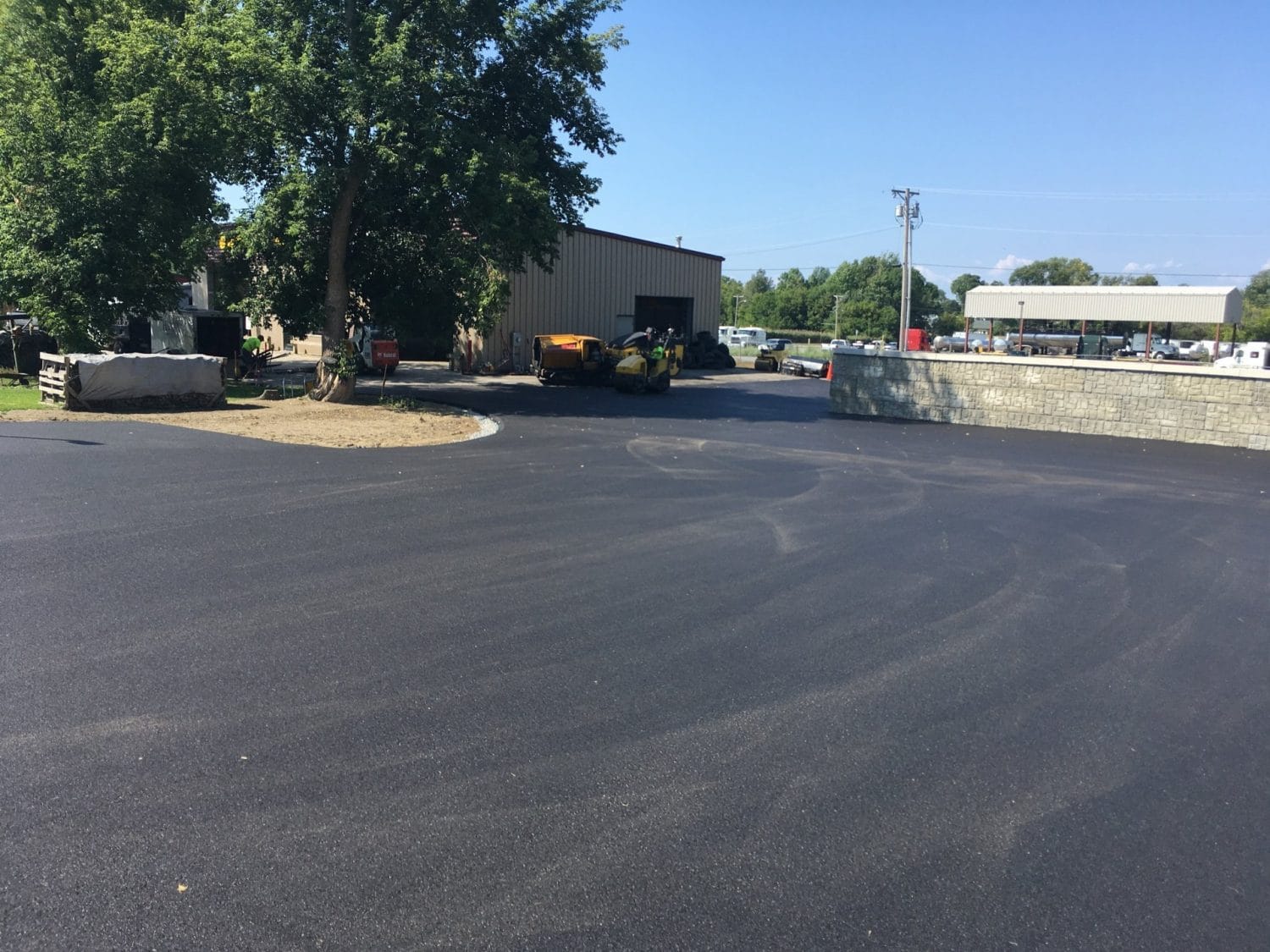
Partner with an experienced team for road paving in Kansas City, MO. We construct and resurface subdivision streets, city roads, and municipal facilities with durable asphalt. Our crews manage traffic control, milling, paving, and compaction to deliver smooth, long lasting driving surfaces.
Precision Asphalt Kansas City provides professional road paving throughout Kansas City, MO, Missouri and the surrounding area. Our licensed, insured crew delivers safe, clean, on-time work with a free estimate before anything begins. Call (816) 326-1167 or request your free quote.
Road paving for Kansas City communities
Safe, smooth streets are basic infrastructure, not a luxury. At Precision Asphalt Kansas City, our road, street, and municipal paving work is focused on how people actually use the roads in and around Kansas City, MO: school drop-off zones, bus routes, truck corridors, and neighborhood side streets.
We regularly partner with cities, public works departments, HOAs, commercial property owners, and general contractors to plan and build asphalt roads that last through Missouri freeze-thaw cycles and heavy rain. Our crews are local, so we know how KCMO clay soils move, where drainage tends to fail, and how traffic loads differ between, for example, West Bottoms industrial routes and quieter Northland subdivisions.
From small municipal patchwork and alleyway reconstruction to full-depth paving of new subdivision streets, we design each job around site conditions instead of using a one-size-fits-all section. That is how we control long-term maintenance costs and reduce complaints about potholes, rutting, and standing water.
How we evaluate streets before paving
Every successful road paving project starts with a realistic assessment of what you have today. Before quoting or recommending a section, Precision Asphalt Kansas City will walk and drive the route, take core samples if needed, and document existing problems so they do not get buried under a fresh overlay.
We look closely at base and subgrade conditions, not just the visible surface. In many Kansas City neighborhoods, older streets sit on poorly compacted native clay or thin aggregate base. If we see alligator cracking, wheel path rutting, or repeated potholes in the same areas, that tells us the structure below the asphalt has failed and needs more than a surface fix.
Drainage is another key issue in Kansas City. We check gutter lines, culverts, and existing storm inlets, and we note where water is ponding or running across the travel lanes. Sometimes the best investment is minor concrete work at the curb line or adjusting inlets so the new asphalt surface can be crowned and sloped correctly.
Traffic loading is the third piece. A residential cul-de-sac that only sees residents and delivery vans can be paved with a different asphalt mix and thickness than an access road serving trash trucks, buses, or heavy industrial traffic. We ask about service vehicles, bus routes, and any plans for future development so the section we recommend is strong enough from day one.
Step by step: our road, street, and municipal paving process
Once we understand the existing conditions and traffic needs, we outline a clear scope of work so city staff, board members, or owners know exactly what will happen on site.
1) Survey and layout. We identify tie-in points, gutters, manholes, and utility castings. Our crew marks limits of removal and sets paving grades. In older Kansas City streets, we often need to adjust elevations slightly to avoid creating trip hazards at driveways and sidewalks.
2) Milling or removal. For overlays, we mill off the existing asphalt to a set depth. This preserves curb heights and prevents the road from creeping up toward garage thresholds or ADA ramps. For full-depth reconstruction, we remove the existing pavement and, if necessary, undercut weak or saturated subgrade.
3) Subgrade repair and base installation. Where the existing base is soft, we stabilize the area with additional aggregate base rock or a geotextile separator. We compact in controlled lifts using rollers sized for street work, then proof roll to identify any spots that still deflect. In Kansas City clay soils we take extra time here, because shortcuts at this stage always come back as premature failure.
4) Tack coat. Before placing new asphalt, we apply a uniform tack coat so the new lift bonds to the old surface or base. Skipping this step leads to slippage and early cracking, so we treat it as a non-negotiable.
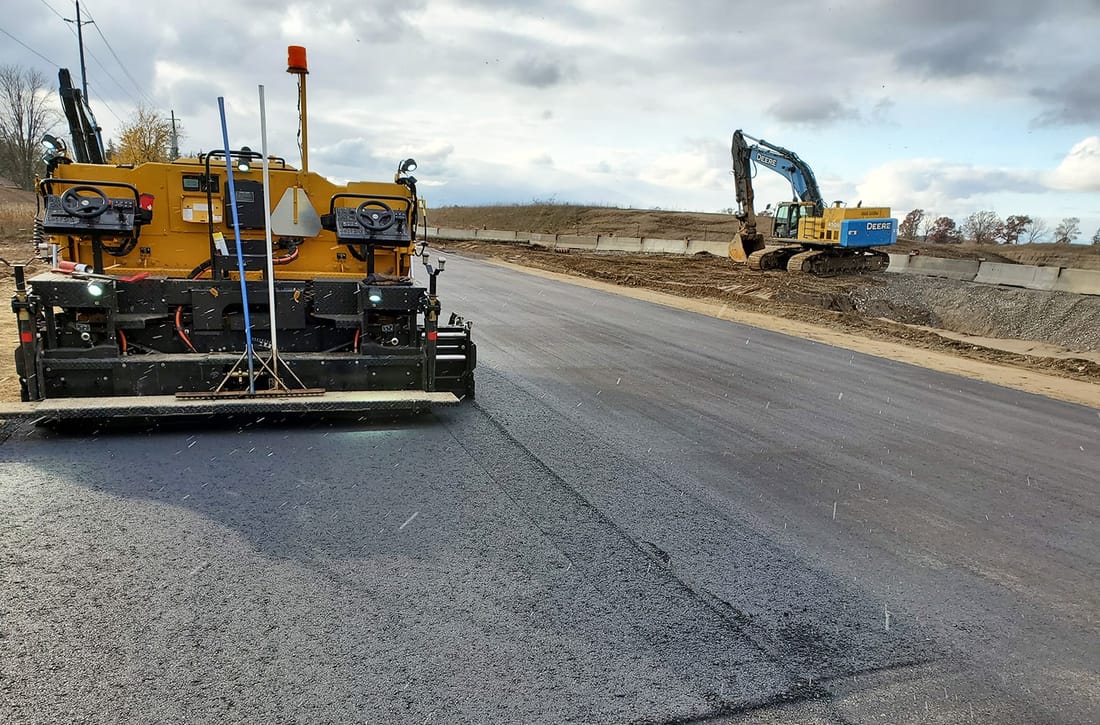
5) Asphalt paving. We place asphalt in one or more lifts, depending on the design thickness, using a self-propelled paver with automatic grade controls where the project allows it. Our crew checks mat temperature, joint quality, and overall smoothness continuously, not just at the end.
6) Compaction. Steel and pneumatic-tire rollers compact the asphalt while it is still at the right temperature window. In municipal work, achieving the specified density is critical, so we perform field testing and adjust roller patterns throughout the shift.
7) Final tie-ins and cleanup. We adjust manholes and water valves to final grade, restore disturbed shoulders or turf, and remove grindings or debris so the road opens clean and safe.
Asphalt options and typical road sections in Kansas City
Not every road surface in Kansas City should be built the same way. Precision Asphalt Kansas City designs sections around use, budget, and available right-of-way.
For neighborhood and subdivision streets, a common approach is an aggregate base over compacted subgrade, topped with 2 to 3 inches of surface asphalt. Where budgets are tight, we might recommend a mill and overlay that recycles existing structure and adds a new wearing course, plus localized base repairs in failing areas.
Collector roads or truck routes often require heavier sections. These might include several inches of base asphalt beneath the surface course, or, in some cases, full-depth asphalt in place of separate aggregate base. For steep grades or intersections where vehicles stop and start, we may use a stiffer mix that resists shoving and rutting.
We also consider seasonal issues. Kansas City winters with freeze-thaw cycles and municipal salt use can be hard on surfaces. Choosing the right mix design, with proper air voids and aggregate, reduces early cracking and ravelling. If a road carries repeated deicing applications or heavy truck chains, we might specify adjustments to the surface aggregate to improve durability and skid resistance.
When the project involves county or city specifications, we work within those standards and can help interpret them for boards or HOAs, explaining what each layer does and where there is flexibility versus where the spec is fixed.
What drives the cost of road paving projects
Many public boards and property managers ask why two streets of similar length can have very different pricing. Precision Asphalt Kansas City is upfront about what actually drives cost so you can make informed decisions.
Project size and mobilization: A single short block carries the same basic setup costs as several blocks. Spreading mobilization, traffic control, and equipment time over more square yards generally brings the cost per yard down.
Depth of repairs: Simple overlays with minimal milling are at the lower end of cost. Full-depth reconstruction, subgrade undercut, or heavy base rock installation increase cost but can be the only way to fix chronic failures.
Traffic control and phasing: Working on a neighborhood street with simple lane closures is one thing. Paving near schools, hospitals, or busy intersections often requires more advanced traffic control, flaggers, off-peak hours, or night work, which affects pricing.
Utilities and structures: Manholes, water valves, and inlets that need adjustment or replacement add labor and materials. In older Kansas City neighborhoods with many castings in the roadway, a larger portion of the budget goes to this detail work.
Access and staging: Narrow streets, limited material staging areas, and steep grades can all slow production. We consider this when planning and are open about how these site realities affect schedule and cost.
We are happy to walk your route with you, explain where cost is being driven, and suggest alternates such as phased work or targeted base repairs to keep the project within realistic funding.
Managing traffic, safety, and schedules during street work
Road paving only works if people can still live, work, and do business around the site. Because we live and work here too, Precision Asphalt Kansas City emphasizes communication and safety on every street and municipal project.
Before work starts, we coordinate with city staff, HOAs, or property managers to determine access needs for buses, emergency vehicles, waste collection, and deliveries. We draft a phasing plan that keeps at least one access route available whenever possible and avoids blocking key hours for schools, churches, or businesses.
During construction, our crews set up MUTCD-compliant traffic control, including signs, cones, flaggers, and barriers as needed. We maintain clear pedestrian paths and pay special attention to ADA ramps and crossings when paving near sidewalks.
We also plan around weather. Kansas City’s sudden storms and summer heat can affect asphalt laydown and compaction. Our team watches the forecast closely and will recommend shifting a paving day if conditions would risk the quality of the finished surface.
Residents and users appreciate clear communication. We provide notice of start dates, expected duration, and temporary parking or access changes, and we respond quickly if emergency access is needed outside of planned windows.
Planning your next road paving project with a local partner
If you are responsible for streets in Kansas City, whether as a city official, HOA board member, property manager, or developer, you do not need a generic national template. You need a local contractor who knows how these roads behave in real weather and traffic.
Precision Asphalt Kansas City can help you prioritize which streets to tackle first, evaluate whether a mill and overlay, heavy patching, or full reconstruction is appropriate, and build a practical multi-year plan that fits available funding.
We are available to attend board meetings or planning sessions to explain options in plain language, show example projects around town, and provide realistic timelines. Because we work across the metro, we can point you to completed streets with similar traffic and soil conditions so you can see how different approaches perform over time.
When you are ready to explore a road paving project, we will start with a site visit, document existing conditions, and prepare a clear, itemized scope. That way you know what is included, where the risks are, and how we plan to manage them in the field.